257
First impressions carry immense weight in residential real estate. Long before an appraiser steps across the threshold or a prospective buyer views the updated kitchen, the exterior of a house establishes an immediate psychological anchor. A well-maintained exterior signals pride of ownership, meticulous ongoing maintenance, and structural health. Conversely, peeling paint, overgrown shrubs, and cracked walkways plant seeds of doubt about deferred maintenance throughout the hidden systems of the house.
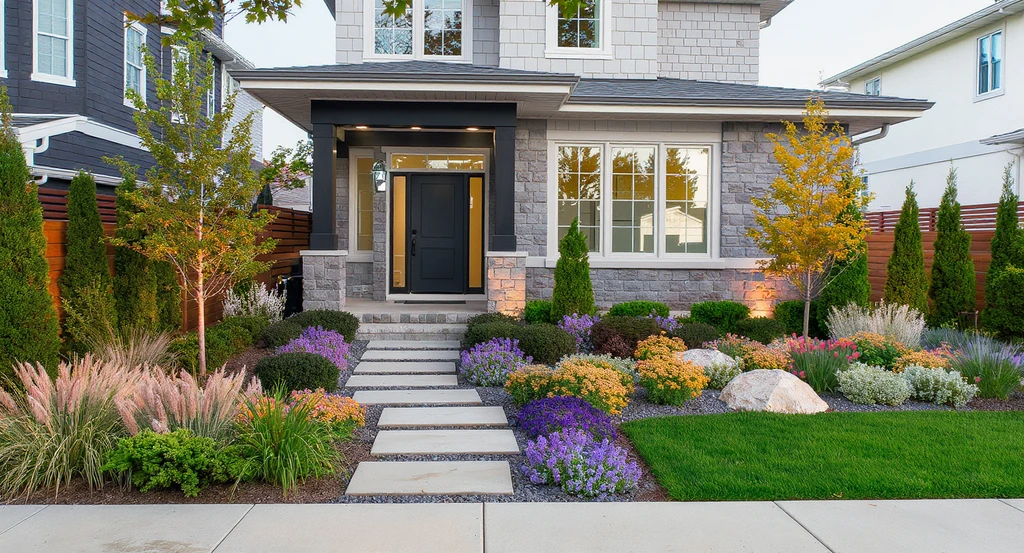
Elevating curb appeal is not merely an exercise in cosmetic vanity. When executed strategically, exterior renovations deliver some of the highest returns on investment in home improvement. Achieving these results requires understanding which specific exterior enhancements yield real financial equity and which ones simply drain capital. Balancing low-maintenance landscaping, architectural lighting, modern materials, and distinct focal points creates an entrance that captures attention and commands top dollar in any housing market.
The Front Entryway as the Primary Focal Point
The front door functions as the architectural handshake of the home. It is where guests pause, where real estate agents stand while unlocking the lockbox, and where human eyes naturally land from the street. Upgrading the entry provides an outsized financial return relative to the cost of materials and installation.
A solid wood door or a heavy-gauge insulated fiberglass door with clean, modern lines immediately updates the entire front elevation. Color selection matters here. While the primary body of the house often benefits from grounded neutral tones, the front door is the place to introduce purposeful contrast. Rich navy, deep forest green, charcoal, or classic architectural black creates a definitive anchor that frames the entrance.
Alongside the door itself, the hardware components complete the transformation.
-
Locksets and Handlesets: Swap out weathered, tarnished brass hardware for substantial, commercial-grade handlesets in matte black, satin nickel, or oil-rubbed bronze.
-
House Numbers: Replace dated, diminutive plastic stickers or thin metal numerals with bold, modern address numbers that measure at least five to six inches in height. Mount them in clean vertical or horizontal alignments where they catch natural sightlines.
-
Wall-Mounted Mailboxes: If the mailbox mounts adjacent to the door, ensure its finish matches the primary hardware. A heavy steel or copper box adds an artisanal touch that speaks to quality.
-
The Threshold and Steps: Pressure wash the landing, repoint aging brick joints, or resurface pitted concrete steps. A clean, level base beneath the entryway ensures safe footing and a sharp, tailored arrival.
Cladding, Paint, and Siding Restoration
The envelope of the home covers the largest visual surface area, making its condition the primary determinant of perceived age. You do not always need a full, six-figure siding overhaul to revitalize this envelope; targeted remediation and smart surface refinishing often achieve comparable visual results.
If the existing siding consists of vinyl, engineered wood, or fiber cement in sound structural shape, a thorough professional pressure washing may be all that is needed to remove years of accumulated mildew, road film, and atmospheric oxidation. Pay particular attention to the northern and shaded elevations where moss and algae tend to take hold.
When repainting is necessary, stick to a disciplined three-color palette consisting of the body color, the trim color, and the accent color. High-contrast schemes, such as warm off-white or soft greige siding paired with crisp white trim, create crisp shadow lines that emphasize architectural details like eaves, gables, and window casings. Be sure to repair rotted fascia boards, warped soffits, and peeling window sills before applying primer. High-grade exterior acrylic latex paint applied over properly prepped surfaces seals the underlying wood and prevents expensive moisture intrusion down the road.
Architectural and Landscape Illumination
Exterior illumination serves two distinct, essential functions: safety after dark and visual drama. A single, underpowered incandescent bulb dangling beside the entry door leaves the front yard feeling flat and unwelcoming once dusk arrives. A layered, low-voltage outdoor lighting plan transforms the property into an inviting showpiece while deterring unwanted trespassers.
The primary entry fixtures should be scaled appropriately to the facade. A common mistake is installing small, builder-grade sconces that appear lost next to an eight-foot entry door. As a general architectural guideline, an exterior lantern should measure roughly one-fourth to one-third the height of the entrance door frame.
Beyond the front porch, extend the lighting design outward using low-voltage LED landscape fixtures.
-
Path Lighting: Position low-profile, downward-facing path lights along walkways and driveway approaches. Stagger the fixtures alternately from side to side rather than placing them in straight, parallel lines, which can look like an airport runway.
-
Architectural Uplighting: Aim narrow-beam spotlights at interesting structural elements, such as stone veneer pillars, decorative gable trusses, or deep entryway arches.
-
Specimen Tree Uplighting: Position floodlights at the base of mature hardwood trees, like Japanese maples or mature oaks, to cast dramatic branching shadows across the upper walls and lawn.
-
Hardscape Undermounts: Conceal subtle LED strip lighting beneath step overhangs and retaining wall capstones to provide soft ambient light that eliminates trip hazards.
Structural Hardscaping and Approach Sequences
The route an individual takes from the curb to the front stoop shapes their physical experience of the property. Cracked concrete slabs, uneven flagstones, and sunken pavers create immediate visual friction and liability concerns.
Replacing a deteriorating front walk with a wide, dedicated hardscape path makes an immediate statement. Standard four-foot walkways feel utilitarian; widening the primary path to five or six feet allows two adults to walk comfortably side-by-side. Poured-in-place concrete pads separated by crushed black basalt, tumbled bluestone pavers, or modular concrete units create clean, intentional geometries that elevate the overall landscape architecture.
The driveway demands similar attention. Because driveways occupy a large footprint in suburban front yards, an oil-stained or crumbling driveway pulls down the entire property. Repair minor surface cracks, patch degraded expansion joints, and apply an asphalt emulsion sealer or a concrete penetrating silane-siloxane sealer to restore deep color uniformity and resist future freeze-thaw spalling.
Layered, Low-Maintenance Softscaping
Landscaping should highlight and frame a home rather than conceal it. Over the years, foundation plantings often outgrow their initial beds, blocking lower-level windows, trapping dampness against exterior walls, and obscuring sightlines.
Begin by aggressively clearing out the beds. Remove dead root balls, trim lower branches on tree canopies to raise light levels, and cut overgrown shrubs back below the lowest edge of the front window trim.
Once cleared, design new plantings using a tiered, layered approach. Place taller evergreen shrubs, such as boxwoods, yews, or emerald arborvitae, in the back tier along the foundation to provide structural green year-round. In the middle tier, incorporate flowering deciduous shrubs, ornamental grasses, and broadleaf perennials to introduce variations in leaf texture and seasonal bloom. In the front tier, install ground covers and perennial edging plants that cascade naturally over the bed borders.
Finish every garden bed with a thick, three-inch layer of shredded hardwood bark mulch or dark organic compost. Crisp, deep bed edging cut with a spade spade creates a distinct boundary between the turfgrass and the planting zones, making the landscape look polished and professionally maintained.
Garage Doors and Overhead Openings
On many modern architectural styles, particularly ranch homes and split-levels, the garage doors face directly forward, taking up as much as forty percent of the total front elevation. A dented, faded, or generic paneled garage door detracts significantly from any other exterior upgrades you make.
Upgrading to an insulated, carriage-house style door or a contemporary full-view aluminum and frosted glass door yields exceptional returns at resale. Look for models with high thermal performance values, quiet belt-drive openers, and integrated windows located across the top panel to draw natural light inside while breaking up the visual weight of the door panels. For homes with traditional siding or stone facades, factory-finished woodgrain composites deliver the visual warmth of authentic cedar or mahogany without the aggressive seasonal maintenance of raw timber.
Frequently Asked Questions
How does replacing the roof affect the curb appeal and resale value of a home?
A roof represents roughly forty percent of a home exterior profile depending on pitch. While an aging roof with curling, missing, or discolored architectural shingles warns prospective buyers of impending leaks, a new dimensional shingle, standing-seam metal, or synthetic slate roof completely resets the visual age of the property. It provides buyers with peace of mind regarding structural dryness, which makes it one of the most reliable improvements for protecting property valuation.
What steps should be taken to update aging exterior brick without harming the masonry?
Traditional exterior brick requires breathability to allow trapped interior moisture to escape naturally. Applying standard non-breathable acrylic or oil-based paints can trap water within the clay, leading to spalling, cracking, and structural degradation during freeze-thaw cycles. To update exterior brick safely, use a mineral-based silicate paint or a breathable potassium silicate masonry stain, which chemically binds with the masonry while leaving the natural microscopic pores open.
Which fencing materials offer the best combination of visual appeal and low maintenance for a front yard?
Aluminum ornamental fencing and high-grade composite materials offer the strongest balance between durability and aesthetics. Unlike traditional wrought iron, powder-coated aluminum will not rust or require frequent scraping and repainting. Unlike raw softwoods, composite fencing panels resist rot, warping, and insect damage, maintaining straight, clean lines and rich color saturation with only an occasional water washdown.
How wide should foundation planting beds be to avoid looking crowded?
Foundation beds should measure at least six to eight feet deep from the house wall out to the lawn edge. Narrow three-foot beds force plants into an awkward, single-file line too close to the siding, which restricts healthy root expansion and traps moisture against building materials. An eight-foot depth allows enough room for distinct planting tiers, proper airflow behind mature foliage, and easy access for seasonal maintenance.
Can replacing gutters and downspouts genuinely improve the aesthetic of a property?
Yes, dingy, dented, or undersized gutters pull visual focus away from high-end architectural trim. Upgrading to oversized, seamless aluminum gutters with continuous hidden hangers eliminates exposed spike heads and creates crisp horizontal fascia profiles. In higher-end architectural applications, installing half-round copper or dark zinc gutters with round corrugated downspouts adds distinct detailing that enhances the historic or custom feel of the house.
What is the most cost-effective way to hide utility meters and air conditioning units visible from the curb?
The most effective approach is installing a freestanding, slatted louver screen made from cedar, composite, or painted PVC boards that matches the trim color of the home. These screens should stand at least two to three feet away from air conditioning condensers to allow adequate operational airflow and provide technicians with easy service access. Pairing the screen with medium-height evergreen shrubs, such as skip laurels or dwarf conifers, softens the perimeter and blends the utility zone into the overall landscape.
How do you prevent exterior light fixtures from creating light pollution or excessive glare for neighbors?
Incorporate Dark-Sky compliant fixtures that direct all emitted light downward toward the ground rather than dispersing it outward or upward into the night sky. Selecting fully shielded fixtures, using warm-temperature LED bulbs between 2700K and 3000K, and pairing fixtures with smart timers or photocells ensures that exterior lighting enhances your property architectural lines without casting harsh glare into neighboring windows.
