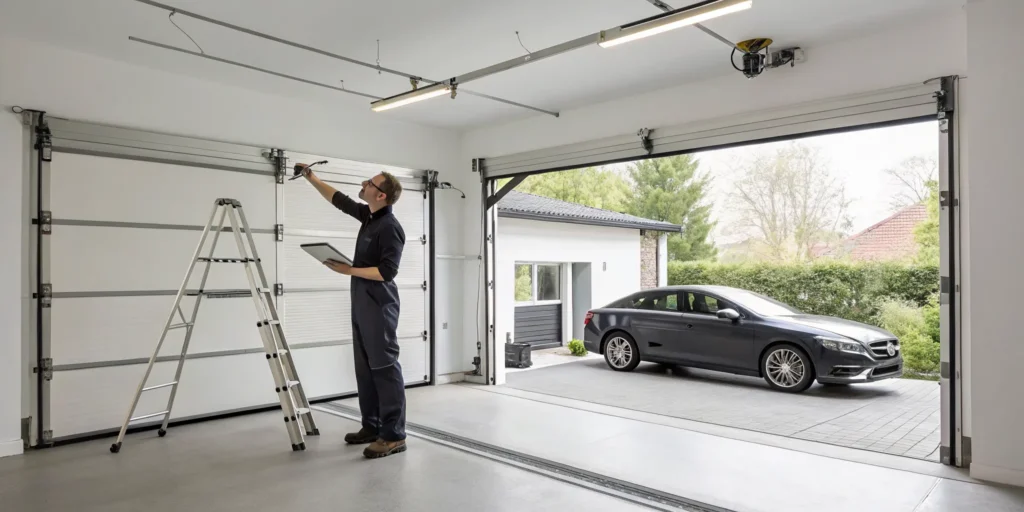
Most garage doors don’t give much notice before they quit. One loud bang or a door that won’t budge can leave a car stuck and the house open to the street. Booking the right help fast comes down to recognizing the signs and knowing what to ask before work starts, as well as what to leave alone.
Why a door stops with no clear reason
A standard residential setup uses one or two tightly wound torsion springs mounted above the opening. Those springs counterbalance the weight so the opener can move the door with little force. When a spring breaks, the door can feel far heavier than expected and the opener can’t lift it safely. That sudden change explains many urgent calls.
Extension springs are the older style. They sit along the sides of the tracks and stretch as the door moves. They tend to wear faster and can act in a less controlled way when they let go. Either type holds enough stored force to cause severe harm, so spring and cable work isn’t a home project.
Sectional doors and roller doors fail in different ways. A sectional door has hinged panels that ride on vertical tracks and then on horizontal tracks. A roller door coils into a drum above the opening. Parts don’t swap between the two designs, and repair steps differ. Note which type is in the garage before phoning so the company can prepare.
Day-to-day wear is hard to see. Cables fray a strand at a time, rollers develop flat spots, and tracks collect dust and grit. Small shifts add up until one part can’t do its job and the whole system stops.
Signs you can spot without touching anything
You don’t need to name the fault. Describe what you see and hear from floor level without touching parts or running the door again. Clear notes help the company send the right parts and give a tighter time window. These patterns are common clues, not firm answers; the technician will identify the cause on site.
Sounds that give a clue
A loud bang in the night, with no sign of forced entry, often goes with a spring break. The door may then sit crooked or feel stuck, and the opener may hum without moving it. Steady grinding or groaning from the opener box often points to wear inside the gear train. Scraping or popping along the side tracks can come from worn rollers or tired hinges. Don’t run the door to check the sound again. Write down when it started and what changed.
Movement clues you can see from the floor
Stand back and look at the door. If one side hangs lower than the other, cables or rollers on that side may have wear. If the door starts down and then comes straight back up, the travel setting or sensor line may need a technician’s attention. If the opener light flashes and the door won’t close at all, the sensor path may be blocked or out of line. Don’t place objects in the path to test it or try to bypass sensors.
Look at the bottom seal and panels in daylight. A cracked or lifted seal can let in water and dust. A dented lower panel from vehicle contact can break the seal and throw off movement. Peeling paint near the coast can point to early corrosion on metal tracks and fixings. Note what you see and leave hands off. The technician will check tension and alignment with the right tools.
How to tell an emergency from a routine booking
An emergency is about safety and access. The door is stuck partly open and won’t lock, or a car is trapped inside or outside at a bad hour. The spring has let go with a bang and the door now sits uneven. The house feels exposed. In those cases a same-day callout is the right move, even after hours.
For homeowners who wake to that kind of failure, waiting until next week isn’t workable. The door needs to be made safe and the house secured that day. Contact a local company for garage door repairs adelaide with 24-hour response for stuck or exposed doors. Have the address, door type, symptoms and photos ready so the call handler can triage quickly.
A routine booking fits different signs. The door still opens and closes but sounds rough. Response from the remote feels slow. The seal looks worn or daylight shows at the edges. The opener works yet the light stays on. Those jobs can wait for a planned visit, but they shouldn’t be ignored for months since small wear can turn into a stuck door.
When you call, ask what the visit covers, including the callout fee and after-hours rates. Ask for an arrival window and what happens if parts need to be ordered. Keep an alternate path in and out of the house clear while you wait. If kids or pets use the garage as a play space, keep that area shut until the technician has been.
What to do while you wait for the technician
Stop using the door once damage is suspected. Don’t press the remote repeatedly to force movement. Keep people and pets away from the opening.
Never walk under a door that is partly open or looks uneven. Leave it where it is.
Don’t touch it.
Springs and cables hold high force even when the door looks still. Don’t touch them or tighten bolts or brackets. Don’t try to lift the panel by hand or move the door for photos. Ground-level notes and a short video from a safe distance give the company enough to work with.
Ask the company how to make the area safe over the phone. It may tell you to switch off power to the opener at the wall switch if it’s easy to reach from a safe spot clear of the door. Don’t open the opener box or bypass safety sensors. Lock the walk-through door between the garage and the house. Move valuables out of sight if the door is stuck open.
If the car is stuck, don’t squeeze past a tilted panel. Use another exit and wait. If the house can’t be locked, ask a neighbor to watch the front while you wait for the arrival window.
What a solid service visit covers
A good visit starts with a look over the whole system. The technician checks springs for wear and cables for fraying, then looks for play and flat spots in rollers and hinges. Tracks get checked for dents and buildup. The bottom seal and side seals get checked for cracks and gaps.
Lubrication and cleaning come next, but only as the manual allows. The technician uses the lubricant type listed in the owner’s manual and wipes away old buildup first, since the wrong product can hold grit and add wear. Tracks get wiped clean rather than packed with product. Hinges and rollers get attention where the manual shows. If it calls for no lubricant on a part, the technician leaves it dry.
Safety checks close out the visit. The technician checks sensor alignment from floor level and makes sure the lenses are clean and face each other. Travel settings get checked so full open and full close stop in the right place. The technician tests the auto-reverse function with trade tools, not with a body part or household object. You should get a short handover explaining what was done and what to watch for next.
Ask how often the door should be checked under its own manual. Frequency shifts with daily use, door weight, heat swings and dust load. A lightly used single door needs a different rhythm than a double door that runs many times a day. Follow the booklet, not a generic rule.
How to vet a company and read a quote
Start with basics that protect the house. Look for a company that does repair work full-time rather than focusing only on sales. Check that its licensing and insurance are current for the area, and that it has live phone support and clear after-hours terms.
Get a written quote before work starts. It should list parts, labor, callout and travel in separate lines, with warranty terms for both parts and labor. It should note what happens if extra damage shows up once covers come off. Give permission for extras only after a price is agreed, not on an open ticket.
Most jobs fall into four bands. Spring work is one band and cable work sits with it. Roller and hinge service is a second band. Panel replacement is a third band since panels must match weight and profile. Full opener replacement is a fourth band when the motor or gear train is past repair. An unusually low price often points to thin parts or rushed labor, so ask for brand names and part ratings in writing.
Repair or replace is a case-by-case call. Age, damage spread, parts supply and safety risk all shape it. A single worn roller set can be serviced. A bent track plus frayed cables may push toward replacement of the affected assembly. The technician should lay out choices with prices and leave the decision with you.
Openers, warranties and weather wear
Modern garage doors often have smart openers with Wi-Fi links and battery backup. App control adds convenience but also another point that can drop out. A flat backup battery can beep through the night. A lost Wi-Fi link can look like a dead remote, while an unpaired phone after an update can look like a broken button. A technician can sort these in minutes on site once mechanical trouble is ruled out.
Keep the owner’s booklet and proof of purchase. Many makers ask that service be done by an approved company to keep coverage in place, chiefly in the early years. Keep to the care steps in the exact manual. Heat swings can tire springs and dry out seals faster than mild use. Salty coastal air can pit rollers and tracks. Homeowners in hot and coastal zones, as around Adelaide, tend to see seals and metal wear sooner, so local conditions should shape the company’s service plan.
A stuck door feels urgent, yet most cases call for the same response. Stop use and note symptoms, then secure the house and book a skilled company. Clear notes and a written quote keep the job calm.
